
Cycloid changelog
Stack Versioning: Tame your infra lifecycle
🚀 We know the feeling: you’ve improved a core stack, but you’re hesitant to push it because you don't want to break dozens of stable production components. Today, we are bridging the gap between rapid innovation and rock-solid stability with the release of Stack Versioning.
This isn't just a minor update: it's a fundamental shift in how you manage the lifecycle of your infrastructure.
❓ The "Why": Governance without the Handbrake
In the past, updating a stack was often an "all or nothing" affair. Stack Versioning introduces a decoupled workflow where platform teams can iterate at light speed while application owners move at their own pace.
True Governance: You can now ensure that production environments only use "Certified" tags, while development teams experiment with bleeding-edge branches.
Safe Transitions: No more forced migrations. You decide when a component is ready to move to the next version, reducing the risk of downtime and "day-to-day" friction.
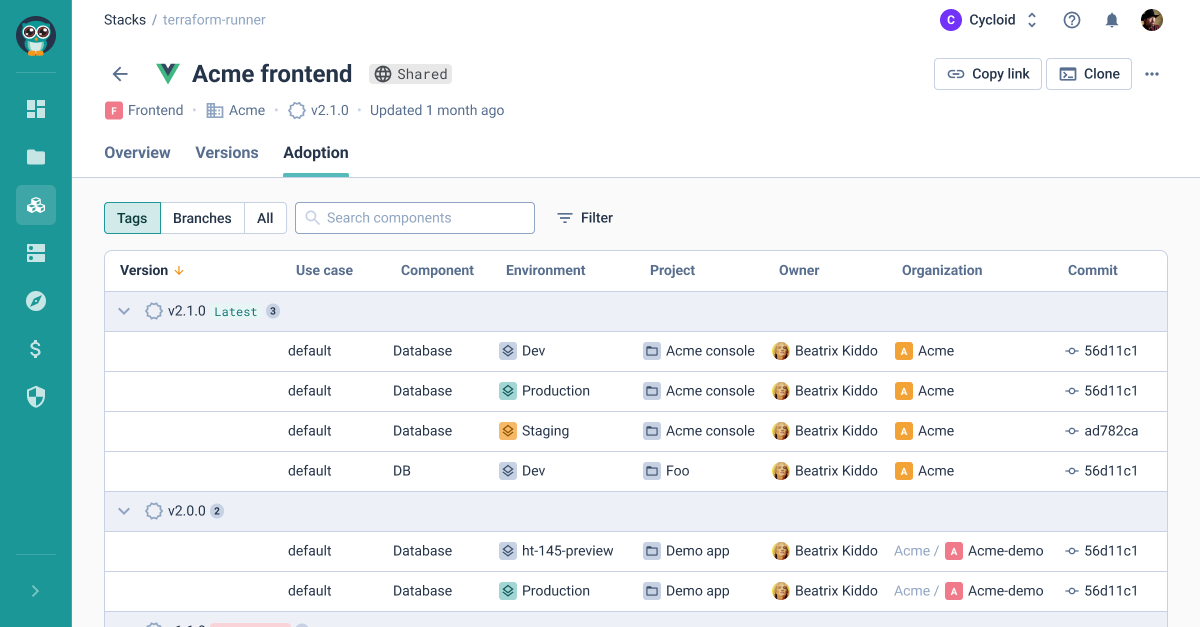
Full Visibility: Stop wondering who is using which version of your Stack. See your entire "stack footprint" at a glance.
💡 Real-World Use Cases to Get You Excited
How will this change your workflow? Here are a few ways you can start using it today:
The Sandbox Sprint: Create a new feature branch for your stack (e.g.,
feat/eks-1.31-upgrade), spin up a test component to validate it, and iterate without ever touching themainbranch used by the rest of the company.Legacy Support: Keep your "Old-but-Gold" legacy apps on
v1.0.0while your new microservices take advantage of the high-performance features inv2.4.0.The "Oops" Recovery: If a stack update reveals a hidden bug in a specific environment, you can perform an instant "downgrade" to a previous stable tag in seconds.
Staged Rollouts: Deploy a new stack version to your
Stagingenvironment first. Once it’s battle-tested, roll it out toProductionat your own convenience.
✨ What’s under the hood?
Version Selection: Pick specific Git tags or branches directly during the component creation wizard.
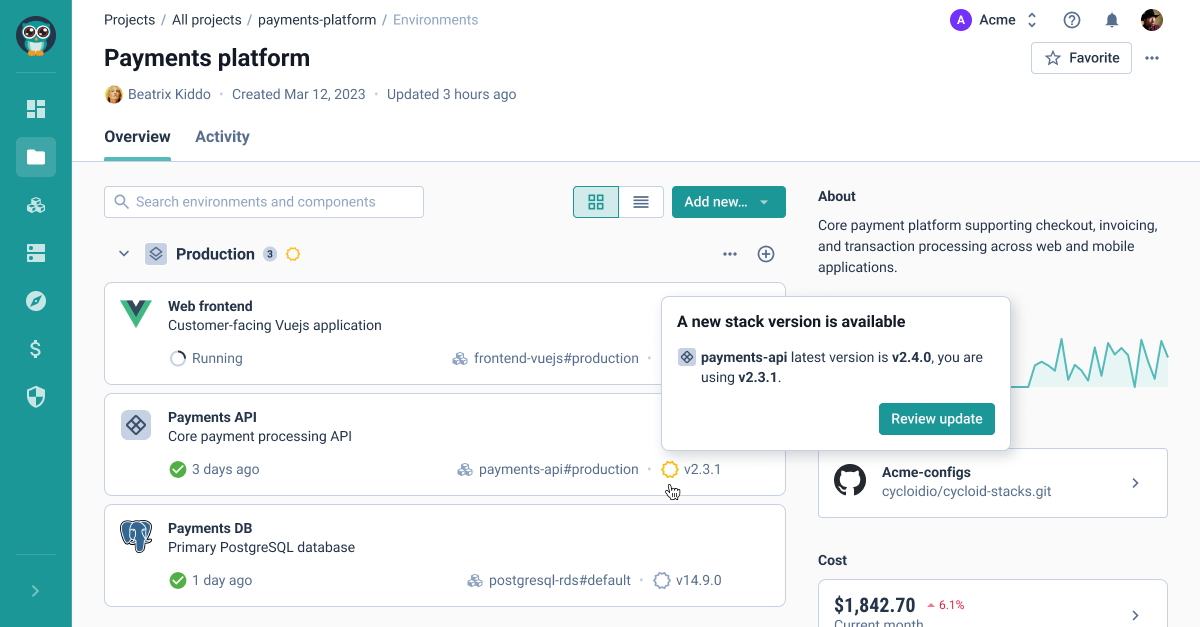
Smart Notifications: Look for the new "Update Available" badges on your components and projects—Cycloid now tells you exactly when you're falling behind.
Adoption Dashboard: Use the new "Adoption" tab to track version distribution across your organization—perfect for auditing and technical debt management.
Maintainer Flexibility: Use standard SemVer (like
v1.2.3) to organize your releases like a pro.
🚀 Ready to take it for a spin?
We can't wait to see how you use this to scale your infrastructure. To get started, you'll just need to make a quick update to your pipeline.yaml to make your Git resources version-aware.
👉 Dive into the Stack Versioning Documentation and start versioning today!
Technical Changelog v6.7.2
ADDED
Service Catalog: Stacks: introduce git-based stack versioning
FIXED
Authentication: Code verifier had a null payload sometimes
Authentication: Display error messages in main window in oidc callback
Authentication: Login page freeze when failed to authenticate
Dashboard: FinOps bad display when elasticsearch/CCM is not used
Pipeline view: Added check that component is in focus when refreshing pipeline data
Project: Improve back button behavior on project and component settings page